
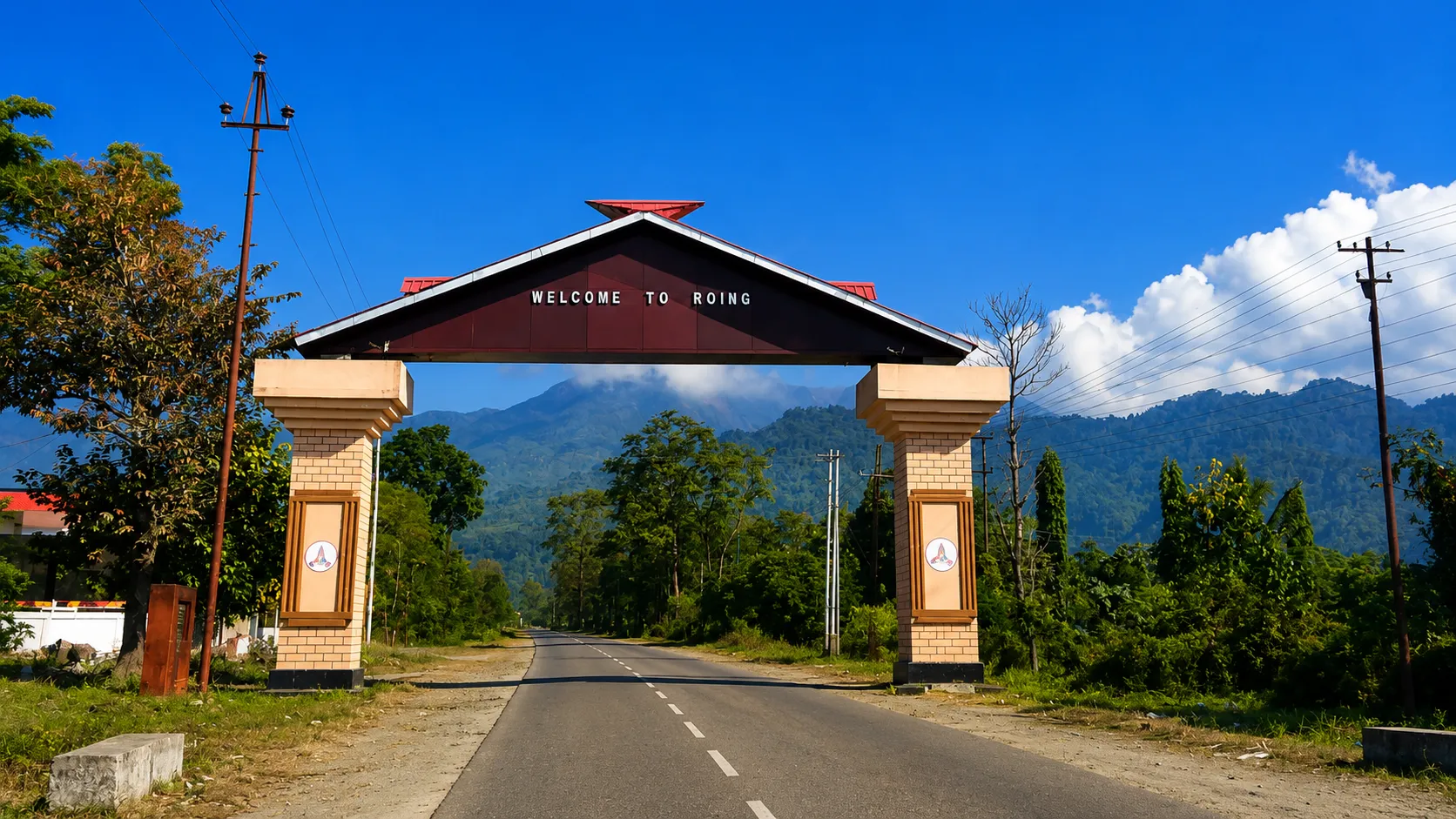
Arunachal Pradesh, North East India
Roing
Roing – The Gateway to the Mishmi Hills
Roing, headquarters of the Lower Dibang Valley district, is celebrated as the gateway to the Mishmi Hills, a biodiverse Eastern Himalayan range home to the indigenous Mishmi tribe. Nestled along the Deopani River at about 390 meters elevation, this scenic town blends dense forests, cascading waterfalls, and snow-capped mountain passes with rich tribal culture, historic sites, and abundant wildlife.
Stays in Roing
No stays listed in Roing just yet.
Browse all staysTravel guide
By Air: The nearest airport is Mohanbari Airport in Dibrugarh, Assam, about 150–160 km away, connected to Guwahati, Kolkata, and Delhi. A chopper service also runs from Naharlagun to Roing for those wanting to skip the long road journey. By Rail: The nearest railway station is Tinsukia Junction in Assam, from where buses and taxis complete the onward journey to Roing. By Road: From Dibrugarh, Roing is reached via Tinsukia and Sadiya, crossing the Bhupen Hazarika Setu (Dhola–Sadiya Bridge), India's longest bridge, taking roughly 4 hours. Arunachal Pradesh State Transport (APST) buses run from Tinsukia to Roing, alongside private buses and taxis. Two check-gates — Shantipur and Paglam — mark the entry into Arunachal Pradesh, where permits are verified. Roing can also be reached from Tezu (about 100 km, via Sunpura road) or from Pasighat (via Dambuk and Nijomghat). Exploring the Mishmi Hills: From Roing, the Mishmi Hills stretch toward Mayodia Pass (56 km, 2,655 m elevation, snow-covered December–February) and onward to remote Anini, home to the Idu Mishmi people. Along the way, Mehao Wildlife Sanctuary (17 km) shelters rare species like the Mishmi takin, red panda, and Himalayan black bear, while Sally Lake (3 km) and Bhismaknagar Fort (30 km, dating to the 12th century) round out the region's natural and historic charm. Entry Permits: Indian nationals need an Inner Line Permit (ILP), obtainable online or on the spot at Arunachal's entry check-gates; foreign nationals require a Restricted/Protected Area Permit (PAP).